1. I selected the four videos based on the order they were in. Matisse and Picasso was probably the only video that I choose because I wanted to learn more about it.
2. Matisse and Picasso- I learned that they were a little nervous about the relationship in the beginning. The relationship between the two was unique and has never been repeated in art history. Both artist broke with tradition. Matisse was the uncontested leader of Fauve and it was an American family that was stunned by his work of a woman with a hat. He was a strength of genius. Picasso was a born painter and Matisse did not become aware of his talents until his early twenties. Matisse rationalized and Picasso didn't care much about rationalization but was more impulsive. Picasso had an intellectual approach which was foreign to Matisse. Picasso was the first to create a colleague. Picasso painted most of his paintings from memory and observation not form posed model. Awareness of differences brought them together. Matisse believed paintings are not for decorating apartments and that his paintings are the pages to his journal. Death of Matisse was awful for Picasso, and a way of his mourning was to carry on their dialogue.
Dance at the Moulin de la Galette- Was the most beautiful picture of the 19th century. Renoir painted the picture twice only changing the size. Renoir lost his childhood family home and looked the originality of it in the city he moved in. He painted local girls and believed there was no such thing as poverty in art. His paintings depicted the way women and men interacted with each other, flirting with sexuality. Renoir aesthetics were of sunshine and daylight and the beautiful. A gap in between seats in one of his paintings gives you room to venture into the picture. Renoir pictures invite you into them. He had a hope for life that was doomed and his paintings responded to the heart first and the mind later.
The Mystical North: The Spanish Art from the 19th Century to the present- I learned that Goya questioned what it means to be a human being. He began painting lighthearted decorative pictures and was considered the father of modern art. Illness left him deaf and he began creating a darker style more pessimistic. He often painted pictures of despair. His home was isolated and he painted the walls with black paintings.. Antoni Gaudi was the first great artist in Spain since Goya and exemplified Barcelona. His style was opposite that of Goya. He was inspired by God's natural world. Picasso was driven by the tension between spirituality and sexuality. Cubism was the coldest most rationalist phase of Picasso's art, making people and objects shimmer something like seen in a vision.. Spain never lost deep conviction for work of art to really capture you. Surrealism was an artistic movement to explore irrational, ideas of the unconscious, and world of dreams. Dali pictures showed an endless clowning around.. There was a tension between his genius and self-pradody. His paintings combined sex, death, and food. Self-obsession and self-exploration was present in the 20th century. Dali was kicked out of the surrealist. Architecture holds the key to Spanish art in the 21st century.
A Sunday on La Grande Jatte, 1884 (Seurat)- This was the painting of the artist who was concerned with experiment and obsession. He repainted the whole canvas. It is hard to understand what the painting is about and often the meaning is changed. It became a hide and seek and was inspired by endless caricatures.Seurat was somewhat conventional and decided early on to study art. His art making was interrupted from his military service. His everyday subjects were mostly solitary figures caught in a half light. His figures were somewhat mystical figures. The subjects were more commonplace. Often painted unaccompanied women and was believed to have painted a prostitute in one of his paintings who was fishing. The revolutionary technique was most important. Only an artist for about 10 years before dying of diphtheria and his death was considered a great loss to art. Popular culture adopted the painting and adding to the characters. Advertisers love the serenity of the painting.
3. The videos relate to text just like the other videos the elaborate on concepts and abstracts within the text. Focusing on main portions that the text briefly referred to.
4. I like the films. Although for the first one I was a little nervous because of the subtitles in the beginning. After continuing to view the video it became just like the rest of the videos, easy to understand and enhancing the meanings and concepts that I read in the text previously. The add depth and understanding to the material for me because of the details and background knowledge that was provided of the artist and the time in which they were created.
Saturday, November 13, 2010

Sunday, November 7, 2010
Art Making/Material Exploration Blog: Mask Making
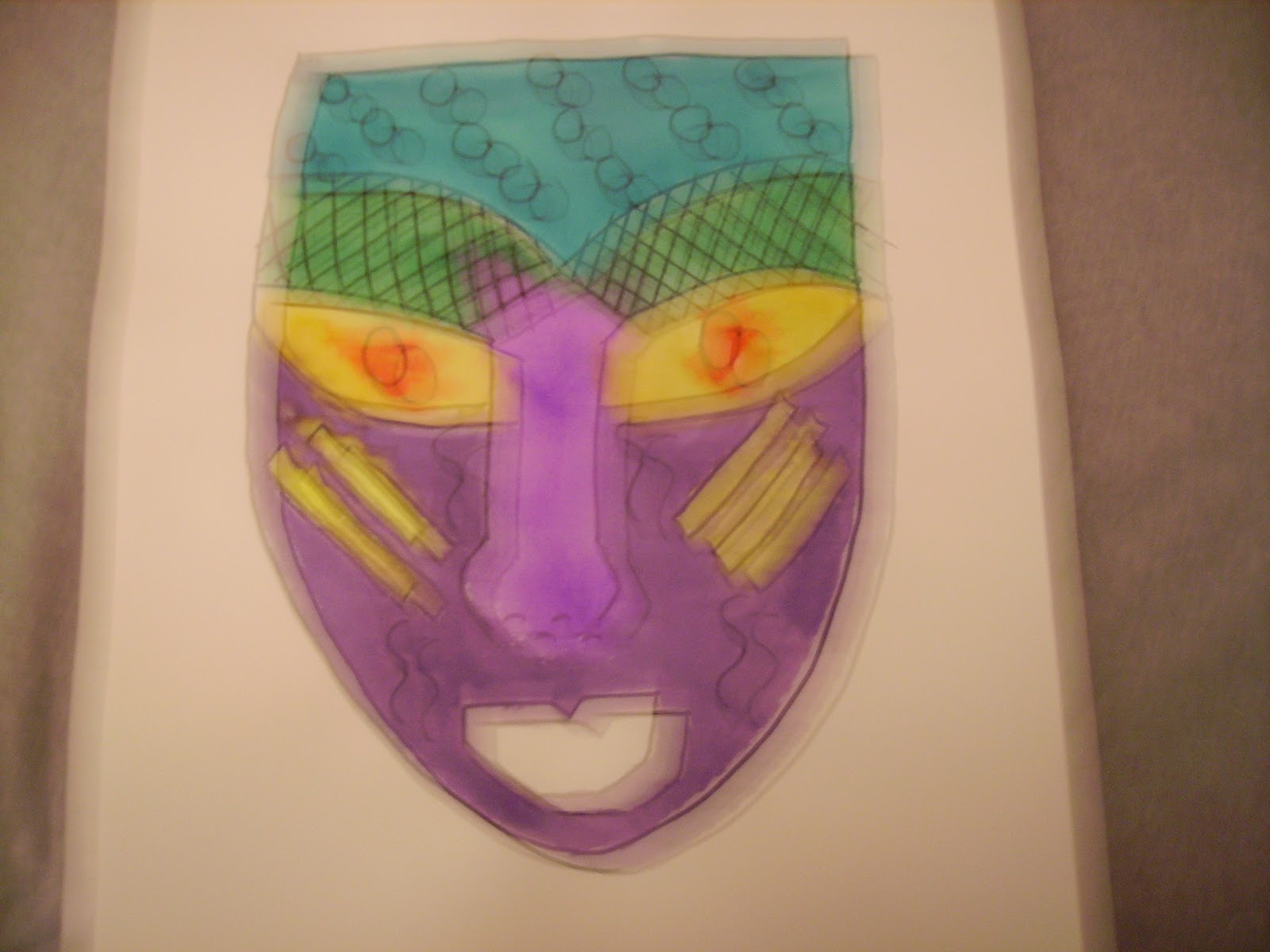
1. I choose the three designs because of their meanings. I also choose the designs because of the detail in them. It was overbearing and it flowed with the mask. The colors were simple and allowed for the details to be appreciated instead of drowned out.
2. I used the elements in principles to create the mask by outlining parts in black. That to me help give the mask and certain details definition. I tried to use different shades of purple to show the difference in the color and the value. I tried to use different patterns to create a rhythm that would be in harmony with one another.
3. I had fun creating the mask. My children helped me with the colors. I think watercolors are a little bit messy but for the most part I really enjoyed making the mask. It actually surprised me how well the finish product came out to be. I tried to use colors that were bright but not over dominating. I also used the colors that are each of my children's and mine as well favorite color.


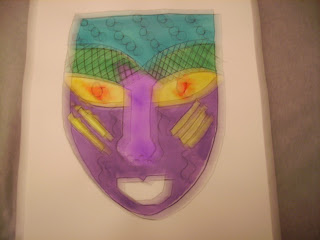

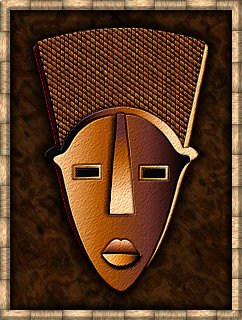


2. I used the elements in principles to create the mask by outlining parts in black. That to me help give the mask and certain details definition. I tried to use different shades of purple to show the difference in the color and the value. I tried to use different patterns to create a rhythm that would be in harmony with one another.
3. I had fun creating the mask. My children helped me with the colors. I think watercolors are a little bit messy but for the most part I really enjoyed making the mask. It actually surprised me how well the finish product came out to be. I tried to use colors that were bright but not over dominating. I also used the colors that are each of my children's and mine as well favorite color.




Friday, November 5, 2010
Week 10 Video Review
1. Explain why you selected each of the FOUR videos you choose from the selection listed above.
African Art: Legacy of Oppression and African Art I choose because I just wanted to gain more information from what was already in the text, and also because I seem to be drawn to African artworks.
Buddhism I choose because I found the topic to be interesting from the reading and I have a friend who often tries to explain this religion.
Hinduism I choose because the previous video mentioned it, so I guess it become more interesting after the fact.
2. For each video list/discuss the key concepts you learned.
African Art: Legacy of Oppression- I learned that the some of the masks actually creates a sinking feeling in ones stomach. That the mask are two toned for a reason. The white side indicates the healthy side and the black side indicates an illness. It was made to create fear so that people would not make fun of the handicapped, and respect elders. Because of the diversity in the cultures there is a huge range of art styles in Central Africa. A world fair once displayed live Africans because they were new and not understand by the Europeans.
African Art- I learned that it played a strong sense in the daily life of the people, with a strong aesthetic sense revealed in traditional homes, everyday utensils, clothing and hairstyles. Some materials like wood and straw deteriorate and were not made to withstand the humid climates. Some art works from these are are less than 200 years old. The oldest existing art is found in the dryer regions. African art was relatively unknown to the Europeans until the 19th century. The Europeans thought the art to be childlike and primitive. To understand the African art you must be familiar with the concepts of perceptual and conceptual art. The Africans focused on more conceptual art. Where the artist used their imagination, mental images and perceptions of invisible forces.. African art take into account realms of magic and religion. The Africans created statues to harness the supernatural powers. The art was not to represent a living human or animal except a powerful king or noble, but instead was used to conjure spirits.
Buddhism- The greatest temptation for Buddha was to walk off and reach nirvana-which is the highest enlightenment. He was a rebel who spoke softly but firmly against authority. Freedoms from preoccupation that feeds the ego and obstruct the way to enlightenment allows the Monks to be of this world but not in the world. Buddha shares his enlightenment and was a gentle and serene person. A stupor has a story to tell and the lotus is the flower of he Buddha. There is actually a Monastery in upstate NY. Leaving the shoes off at the door confers respect and the chanting is done to free them distractions of the ego.
Hinduism- The river is a symbol of life, death, and rebirth. Worship can be done anywhere and does not need a large temple but instead have detailed shrines. The reason why it does not have to be so great is because you can't take it with you, and it appeals to the idea of letting go. There are many gods and goddesses in this religion. The many gods and goddesses is what helps create rich art and architecture because they are seen through these representations of art and architecture. Finding your way to Brahma can be affected by your personality and your circumstances. Hinduism does not seek to convert other religions, but respect those seeking Brahma. The female is the begetter of life. Once liberation is reached the cycle of life is ended. There are many ways to reach Brahma.
2. How do the videos relate to the readings in the text?
The videos relate to the text because they elaborate on the information that was in the text.
3. What is your opinion of the films? How do they add depth to understanding of the readings and art concepts?
I always like watching the films after reading the text. The videos always add on to information that I got from the text and it also solidifies concepts that were in the text,
African Art: Legacy of Oppression and African Art I choose because I just wanted to gain more information from what was already in the text, and also because I seem to be drawn to African artworks.
Buddhism I choose because I found the topic to be interesting from the reading and I have a friend who often tries to explain this religion.
Hinduism I choose because the previous video mentioned it, so I guess it become more interesting after the fact.
2. For each video list/discuss the key concepts you learned.
African Art: Legacy of Oppression- I learned that the some of the masks actually creates a sinking feeling in ones stomach. That the mask are two toned for a reason. The white side indicates the healthy side and the black side indicates an illness. It was made to create fear so that people would not make fun of the handicapped, and respect elders. Because of the diversity in the cultures there is a huge range of art styles in Central Africa. A world fair once displayed live Africans because they were new and not understand by the Europeans.
African Art- I learned that it played a strong sense in the daily life of the people, with a strong aesthetic sense revealed in traditional homes, everyday utensils, clothing and hairstyles. Some materials like wood and straw deteriorate and were not made to withstand the humid climates. Some art works from these are are less than 200 years old. The oldest existing art is found in the dryer regions. African art was relatively unknown to the Europeans until the 19th century. The Europeans thought the art to be childlike and primitive. To understand the African art you must be familiar with the concepts of perceptual and conceptual art. The Africans focused on more conceptual art. Where the artist used their imagination, mental images and perceptions of invisible forces.. African art take into account realms of magic and religion. The Africans created statues to harness the supernatural powers. The art was not to represent a living human or animal except a powerful king or noble, but instead was used to conjure spirits.
Buddhism- The greatest temptation for Buddha was to walk off and reach nirvana-which is the highest enlightenment. He was a rebel who spoke softly but firmly against authority. Freedoms from preoccupation that feeds the ego and obstruct the way to enlightenment allows the Monks to be of this world but not in the world. Buddha shares his enlightenment and was a gentle and serene person. A stupor has a story to tell and the lotus is the flower of he Buddha. There is actually a Monastery in upstate NY. Leaving the shoes off at the door confers respect and the chanting is done to free them distractions of the ego.
Hinduism- The river is a symbol of life, death, and rebirth. Worship can be done anywhere and does not need a large temple but instead have detailed shrines. The reason why it does not have to be so great is because you can't take it with you, and it appeals to the idea of letting go. There are many gods and goddesses in this religion. The many gods and goddesses is what helps create rich art and architecture because they are seen through these representations of art and architecture. Finding your way to Brahma can be affected by your personality and your circumstances. Hinduism does not seek to convert other religions, but respect those seeking Brahma. The female is the begetter of life. Once liberation is reached the cycle of life is ended. There are many ways to reach Brahma.
2. How do the videos relate to the readings in the text?
The videos relate to the text because they elaborate on the information that was in the text.
3. What is your opinion of the films? How do they add depth to understanding of the readings and art concepts?
I always like watching the films after reading the text. The videos always add on to information that I got from the text and it also solidifies concepts that were in the text,
Friday, October 29, 2010
Video Reviews
1. I selected the four videos from the list based on their titles. If the title sounded like something that I read or was familiar with I decided to watch. Also, as usual my kids helped me pick. We watch the videos together.
2. The Drawings of Michelangelo- The key concepts I learned in this video is that although you can go to a museum and almost anyone can view his work, previously that was not the case. He also, did not share his drawings before the final works that he created. He had his first apprenticeship at age 12. He used rough sketching of space and geometrical simplification of figures and the drawings he created are difficult for some artist to accomplish. The sculpture of David was the first colossal marble sculpture since antiquity in Italy. He used his sketches and drawings to rework his figures for perfection, looking for the inner state of the figure. Although, the Sistine chapel ceiling is a beautiful work of art it was difficult for him to complete. He often paid attention to detail, with a conflicting passion response to the beauty of the male body and the Christian faith. Michelangelo had conflicting feelings of hope and dread as he approached death.
Albrecht Durer: Image of a Master- He dragged art out of the Middle Ages from Europe. His paintings were more truthful and not idealized. He began his apprenticeship at age 15. He worked as a traveling craftsman for 4 years. His self portraits were a way of self inquiry. He claimed that other artist were jealous of him and threatened to kill him. He sometimes used 4-6 layers of each color in a painting to create an enamel like finish. He used a grid to accurately transfer his art work. He was constantly searching for the perfect form and refining his art. He also used printmaking to produce multiple copies and to reach more people.
Leonardo da Vinci: The Mind of the Renaissance- As a result of his intelligence he was fascinated with the observing the changes in nature. He showed a real passion for his drawings. He observed the hand gestures, faces, and motions of the soul. He was the first to use landscape as the main subject of a drawing, and was also the first to secretly do dissections. He did these dissections so that he can better understand the human body and how it worked. He believed a painting had two parts..spiritual (power of thought) and material (body). The body is nothing compared to the soul, and beauty and harmony are of divine nature. Geometry embraces everything in the universe. Although, he was skillful he didn't receive much work because he had a reputation for leaving work unfinished. He devoted himself to his inventions and research.
The Night Watch (Rembrandt)- This a massive painting that was a pilgrimage for the Dutch. The painting is described as creating a complex and intriguing picture. He approached the painting in a revolutionary way. Instead of having the people pose for the painting he let them act on their own. The merchants paid to be included in this painting. He persuaded movement into the picture and some figures actually moving from the frame. The painting was actually cut from a man claiming to act according to the lord, and the process of restoration began and was recorded.
3. The videos relate to the readings in the text because these videos are concepts that we read about. Whether in these 2 chapters or previous chapters.
4. I think the3 films were good. They add meaning to the things we read because it gives a more detailed look at certain topics. The textbook doesn't go into as much detail, so the videos help solidify what I consider to be a broad explanation.
2. The Drawings of Michelangelo- The key concepts I learned in this video is that although you can go to a museum and almost anyone can view his work, previously that was not the case. He also, did not share his drawings before the final works that he created. He had his first apprenticeship at age 12. He used rough sketching of space and geometrical simplification of figures and the drawings he created are difficult for some artist to accomplish. The sculpture of David was the first colossal marble sculpture since antiquity in Italy. He used his sketches and drawings to rework his figures for perfection, looking for the inner state of the figure. Although, the Sistine chapel ceiling is a beautiful work of art it was difficult for him to complete. He often paid attention to detail, with a conflicting passion response to the beauty of the male body and the Christian faith. Michelangelo had conflicting feelings of hope and dread as he approached death.
Albrecht Durer: Image of a Master- He dragged art out of the Middle Ages from Europe. His paintings were more truthful and not idealized. He began his apprenticeship at age 15. He worked as a traveling craftsman for 4 years. His self portraits were a way of self inquiry. He claimed that other artist were jealous of him and threatened to kill him. He sometimes used 4-6 layers of each color in a painting to create an enamel like finish. He used a grid to accurately transfer his art work. He was constantly searching for the perfect form and refining his art. He also used printmaking to produce multiple copies and to reach more people.
Leonardo da Vinci: The Mind of the Renaissance- As a result of his intelligence he was fascinated with the observing the changes in nature. He showed a real passion for his drawings. He observed the hand gestures, faces, and motions of the soul. He was the first to use landscape as the main subject of a drawing, and was also the first to secretly do dissections. He did these dissections so that he can better understand the human body and how it worked. He believed a painting had two parts..spiritual (power of thought) and material (body). The body is nothing compared to the soul, and beauty and harmony are of divine nature. Geometry embraces everything in the universe. Although, he was skillful he didn't receive much work because he had a reputation for leaving work unfinished. He devoted himself to his inventions and research.
The Night Watch (Rembrandt)- This a massive painting that was a pilgrimage for the Dutch. The painting is described as creating a complex and intriguing picture. He approached the painting in a revolutionary way. Instead of having the people pose for the painting he let them act on their own. The merchants paid to be included in this painting. He persuaded movement into the picture and some figures actually moving from the frame. The painting was actually cut from a man claiming to act according to the lord, and the process of restoration began and was recorded.
3. The videos relate to the readings in the text because these videos are concepts that we read about. Whether in these 2 chapters or previous chapters.
4. I think the3 films were good. They add meaning to the things we read because it gives a more detailed look at certain topics. The textbook doesn't go into as much detail, so the videos help solidify what I consider to be a broad explanation.
Art6 Making/Material Exploration Drawings- Exploring Line
1. What was it like using your hand as subject matter for a drawing?
It was okay using my hands as subject matter. I didn't realize how many lines were in my hands.
2. What media did you select - pencil or charcoal? Why?
I used charcoal, because I thought it would be easier to maneuver in my least dominant hand, and because I just wanted to try something new and feel the difference between the two.
3. How did it feel to create a drawing with your non-dominant hand?
The outline was hard, but after I got used to it, it wasn't so bad.
4. Compare and contrast your final drawings. Do you think they are successful studies?
In the dominant hand drawing the outline is definitely better but I think the lines of the hands were easier to draw using the least dominant hand. It could be because I knew what to expect but to me it was easier. It seemed less stressed and less controlled which made it easier and faster to manipulate the charcoal.
5. Would you consider using your non-dominant hand to create artwork in the future?
It would have to depend on what effect I was going for. If I wanted a less controlled piece of work I would say definitely. Outline I may still would use my dominant hand.

It was okay using my hands as subject matter. I didn't realize how many lines were in my hands.
2. What media did you select - pencil or charcoal? Why?
I used charcoal, because I thought it would be easier to maneuver in my least dominant hand, and because I just wanted to try something new and feel the difference between the two.
3. How did it feel to create a drawing with your non-dominant hand?
The outline was hard, but after I got used to it, it wasn't so bad.
4. Compare and contrast your final drawings. Do you think they are successful studies?
In the dominant hand drawing the outline is definitely better but I think the lines of the hands were easier to draw using the least dominant hand. It could be because I knew what to expect but to me it was easier. It seemed less stressed and less controlled which made it easier and faster to manipulate the charcoal.
5. Would you consider using your non-dominant hand to create artwork in the future?
It would have to depend on what effect I was going for. If I wanted a less controlled piece of work I would say definitely. Outline I may still would use my dominant hand.

Friday, October 22, 2010
Video Reviews
1. I selected Cairo Museum because when I was doing the readings my son saw the picture of Egypt and said he learned about Egypt in school. So I figured it would be fun to watch the video with him. I selected Beyond the Classical: Byzantine and Later Greek because I remember it from the reading and was a little unclear and I usually get it after watching the videos, and the last video The Measure of All Things: Greek Art and the Human Figure because I found the topic just to be interesting since a lot of art have some sort of human form in it.
2. More Human Than Human- the most thing that struck me and stayed with me in this video is that although the human body dominates in life, most artists depicts the human body in images that do not resemble our actual bodies. I was also fascinated with the Venus of Willendorf because the sculpture was deliberately made to look the way it did.
Cairo Museum- the most interesting fact I learned about this video was that half of the artifacts are actually in the basement and not on display. That the artifacts are hidden treasures and ancient knowledge of Egypt. It reminds of what modern day would be a time capsule. You get to learn about the past in the future.
Beyond the Classical: Byzantine and Later Greek- the Greek church had a strong influence on art and that it can be traced back to the ruler Constantine who defaced ancient Greek images of Gods like Zeus and images of Mary were brought in. I also learned that the art Post Byzantine had a familiar theme as previous art but with a new modern age which gave rise to a different name. Throughout history ancient Greek Architecture has the strongest influence.
The Measure of All Things: Greek Art and the Human Figure- I learned that some sculptures were considered silent weaknesses because it is hard to decipher what they actually meant. That we can know what they are made of, and that's what gives the sculpture the abstract style. That most of the figures were that of women.
3. The videos relate to the reading because the focused on some of the concepts that was within the reading. The videos are a direct correlation to the reading and in added tool to enhance my understanding to what I was reading.
4. I think the films were nice. The pictures were nice. I especially enjoyed the Cairo Museum and the images of the artifacts and the rulers. The add depth to my understanding because I was a little confused when I was reading the difference between Byzantine art and Post Byzantine art.
2. More Human Than Human- the most thing that struck me and stayed with me in this video is that although the human body dominates in life, most artists depicts the human body in images that do not resemble our actual bodies. I was also fascinated with the Venus of Willendorf because the sculpture was deliberately made to look the way it did.
Cairo Museum- the most interesting fact I learned about this video was that half of the artifacts are actually in the basement and not on display. That the artifacts are hidden treasures and ancient knowledge of Egypt. It reminds of what modern day would be a time capsule. You get to learn about the past in the future.
Beyond the Classical: Byzantine and Later Greek- the Greek church had a strong influence on art and that it can be traced back to the ruler Constantine who defaced ancient Greek images of Gods like Zeus and images of Mary were brought in. I also learned that the art Post Byzantine had a familiar theme as previous art but with a new modern age which gave rise to a different name. Throughout history ancient Greek Architecture has the strongest influence.
The Measure of All Things: Greek Art and the Human Figure- I learned that some sculptures were considered silent weaknesses because it is hard to decipher what they actually meant. That we can know what they are made of, and that's what gives the sculpture the abstract style. That most of the figures were that of women.
3. The videos relate to the reading because the focused on some of the concepts that was within the reading. The videos are a direct correlation to the reading and in added tool to enhance my understanding to what I was reading.
4. I think the films were nice. The pictures were nice. I especially enjoyed the Cairo Museum and the images of the artifacts and the rulers. The add depth to my understanding because I was a little confused when I was reading the difference between Byzantine art and Post Byzantine art.
Tuesday, October 12, 2010
Video Review
Prairie Style
1. The key concepts I learned from that video is how the environment and design should be harmonious. I also, learned that Frank Lloyd Wright was very influential in the concept of buildings blending with the environment and not taking from the surrounding area. The place where you are going to build has great importance because the interior of the house should have a strong relationship with the landscape outside.
Architecture: The Science of Design
1. The one thing that was the most fascinating is that skyscrapers actually sway with the high winds. That if a building is not properly built that you may be able to feel this sway. The substructure of the buildings have to be able to accommodate dead weight as well as living weight.
Classical Architecture
1. Ancient Greece and Ancient Rome are very influential in modern day architecture. Classical architecture reflects the needs and values of that time. The buildings along the classical ideas are proportionate, harmonious and often have columns.
Frank Gehry: Architecture as Art
1. I like the way he thinks. He didn't make plans but his work is often derived from his current feelings. He felt as though buildings should create an emotional response and that you should have a sense of feeling when inside of the building. The building should interact with the human response.
2. The videos relate to the text because the covered the different architecture designs. The one thing that really related to the text was Frank Lloyd Wright. The text gave a brief description of his work, but the video went into m ore detail. The pictures were nice because you can see how the nature and house blended together. The open floor plans seem to blend with the outside of the homes.
3. The films were nice to watch. The added more meaning because it gave more examples and pictures, which made the concepts of the book solidify in my mind. It makes look at buildings a little differently, as far as the columns and the way windows are situated. If indeed this building compliments its surroundings or take away from the earths natural beauty.
4. I choose the last video because of the title. It seemed interesting to see the correlation between art and architecture. I also wanted to see if there was a beauty in the building beyond the interior decorator designs.
1. The key concepts I learned from that video is how the environment and design should be harmonious. I also, learned that Frank Lloyd Wright was very influential in the concept of buildings blending with the environment and not taking from the surrounding area. The place where you are going to build has great importance because the interior of the house should have a strong relationship with the landscape outside.
Architecture: The Science of Design
1. The one thing that was the most fascinating is that skyscrapers actually sway with the high winds. That if a building is not properly built that you may be able to feel this sway. The substructure of the buildings have to be able to accommodate dead weight as well as living weight.
Classical Architecture
1. Ancient Greece and Ancient Rome are very influential in modern day architecture. Classical architecture reflects the needs and values of that time. The buildings along the classical ideas are proportionate, harmonious and often have columns.
Frank Gehry: Architecture as Art
1. I like the way he thinks. He didn't make plans but his work is often derived from his current feelings. He felt as though buildings should create an emotional response and that you should have a sense of feeling when inside of the building. The building should interact with the human response.
2. The videos relate to the text because the covered the different architecture designs. The one thing that really related to the text was Frank Lloyd Wright. The text gave a brief description of his work, but the video went into m ore detail. The pictures were nice because you can see how the nature and house blended together. The open floor plans seem to blend with the outside of the homes.
3. The films were nice to watch. The added more meaning because it gave more examples and pictures, which made the concepts of the book solidify in my mind. It makes look at buildings a little differently, as far as the columns and the way windows are situated. If indeed this building compliments its surroundings or take away from the earths natural beauty.
4. I choose the last video because of the title. It seemed interesting to see the correlation between art and architecture. I also wanted to see if there was a beauty in the building beyond the interior decorator designs.
Subscribe to:
Posts (Atom)